
A $40 phone case and a $4,000 watch shouldn’t necessarily carry the same delivery promise, even if your carrier’s basic transit time is identical for both. High-value and fragile items often move through extra steps — signature confirmation, additional insurance processing, specialized packaging — that a standard estimate doesn’t account for.
Here’s what actually changes for these products, how much time each step really adds, and how to set an estimate that reflects the extra care rather than hiding it.
What Actually Adds the Days
“It’s expensive so it takes longer” is not a reason a customer will accept. These are the specific steps that add real time, and roughly where they land:
| Extra step | Where the time goes | Typical impact |
|---|---|---|
| Signature or ID required on delivery | Failed attempts when nobody is home | 0–2 days, occasionally more |
| Additional insurance or declared value | Paperwork before the parcel is booked | Usually hours, not days |
| Protective packaging or crating | Your own bench time | Half a day to 2 days |
| Specialist or freight carrier | Slower networks, scheduled collections | 1–3 days on top of standard |
| Condition check before dispatch | Inspecting and photographing the item | A few hours |
Signature-required delivery is the one that most often blows a window, and note that it lands after dispatch. It is not your processing time getting longer — it is the carrier making two or three attempts to find somebody at home. That is worth building into the maximum end of your estimate rather than pretending it never happens.
| 🎯 NOTE Not every high-value item needs a different estimate — this matters specifically when the extra handling steps genuinely add time. If your process for a $4,000 item is identical to your $40 item, a single estimate is fine. |
Fragile and Valuable Are Two Different Problems
These get lumped together and they should not be. They add time in different places, and confusing them leads to solving the wrong one.
Valuable is a security problem. The risk is theft or a disputed delivery, so the answer is signature, tracking, insurance and sometimes ID on handover. Almost all of the added time sits after dispatch, in the carrier’s hands.
Fragile is a handling problem. The risk is breakage, so the answer is packaging, a gentler service, and sometimes a pallet instead of a parcel. Almost all of the added time sits before dispatch, on your bench.
Which one you are dealing with tells you which number to change. A fragile item needs a longer processing time; a valuable one needs a wider delivery window. An expensive glass sculpture needs both, which is why it is the slowest thing you will ever ship.
Setting a Realistic Window for These Products
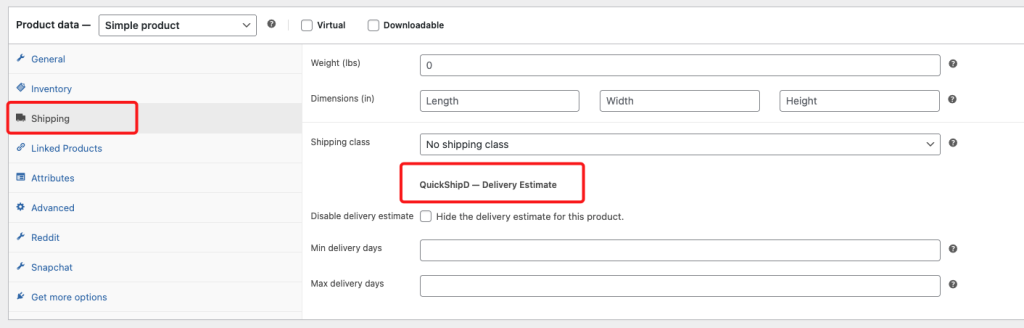
Use per-product delivery day overrides for items that go through extra handling, and base the number on how long that process actually takes — not your standard processing time with a token day added for caution’s sake.
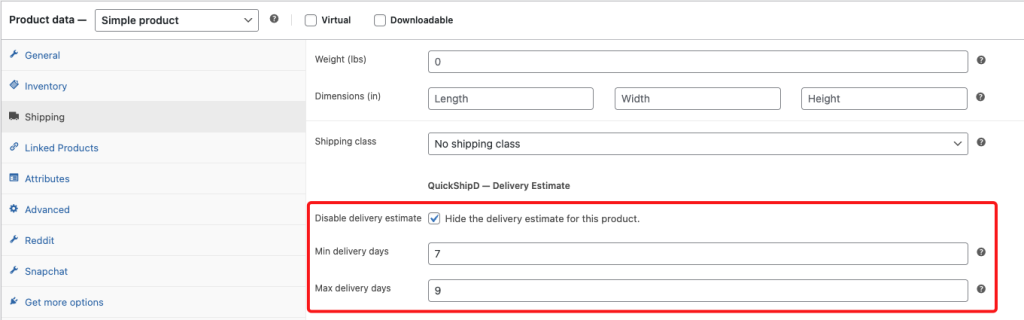
The practical method: take your last ten orders of that product, count the actual days from order to delivery, and use the slowest of them as your maximum. Ten real orders beat any amount of estimating, and if you have not shipped ten yet, be generous until you have.
Tell the Customer Why It’s Longer
If it’s useful, pair the estimate with a brief line explaining why: “Get it by Friday, June 12 (includes signature-required delivery).” This turns what might otherwise look like an unexplained slower estimate into a reasonable, understood one.
On a high-value purchase this does something an estimate alone cannot: it signals that the item is being handled carefully. A buyer spending four figures is not looking for the fastest possible shipping — they are looking for evidence that you take the item seriously. A longer window with a stated reason reads as diligence. The same window with no explanation reads as a slow shop.
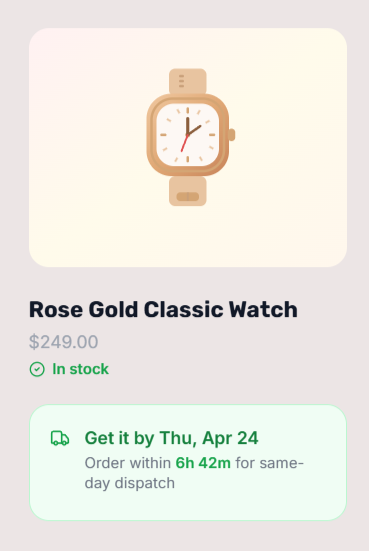
One more thing worth saying explicitly at checkout: that somebody will need to be there to sign. Discovering that from a missed-delivery card is the most avoidable bad experience in this whole category.
| 💡 PRO TIP If signature-required delivery is the main reason for a longer window, say so explicitly. Customers generally understand and accept extra security steps for expensive items — what frustrates them is an unexplained delay that looks identical to a cheaper product’s estimate. |
Match the Estimate to the Real Process
High-value and fragile items often genuinely take longer to ship safely, and the delivery estimate should reflect that real process rather than pretending it’s identical to a standard item. A brief explanation alongside a longer window keeps the promise both accurate and understood.
QuickShipD estimated delivery dates support per-product overrides, which make it straightforward to set that different window exactly where it’s needed.
Frequently asked questions
How much longer does high-value product delivery actually take?
It depends entirely on which extra steps apply. Insurance paperwork adds hours. Protective packaging adds half a day to two days. Signature-required delivery can add nothing, or two days if the carrier keeps missing the customer. Measure your own orders rather than guessing.
Should every high-value product have a longer delivery estimate?
Only if your actual handling process for that product genuinely takes longer. Price alone isn’t the deciding factor — the real steps involved are.
Does signature-required delivery delay the order?
Not the dispatch, but potentially the arrival. If nobody is home the carrier reattempts or holds the parcel, which can add a day or two. Telling customers at checkout that a signature is needed is the cheapest way to avoid it.
Does explaining the reason for a longer window actually help conversion?
Generally yes — an explained delay reads as diligence, while an unexplained one reads as slowness. The context changes how the same number is perceived, and on an expensive item diligence is what the buyer is shopping for.
What if only some high-value items need signature confirmation?
Apply per-product overrides only to the specific items that actually require it, rather than a blanket rule based on price alone.
Is a fragile item the same as a high-value one?
No. Fragile is a handling problem solved with packaging, and the extra time lands before dispatch. Valuable is a security problem solved with signature and insurance, and the extra time lands after dispatch. Change your processing time for the first, your delivery window for the second.