
Dropshipping runs on a supply chain you don’t control end to end, which makes delivery estimates genuinely harder to get right — and genuinely more important, since customers have no idea (and no reason to care) that a supplier on the other side of the world is part of the process.
Here’s what’s realistic to promise when you’re dropshipping, and how to set an estimate that survives contact with an unpredictable supplier.
Why Dropshipping Estimates Are Harder to Get Right
In a typical fulfilment setup, you control processing time because you control the warehouse. In dropshipping, your supplier controls it, and their processing time can vary between suppliers, between products, and sometimes between orders with the same supplier depending on their own stock levels.
Transit time is often longer too, especially with suppliers shipping internationally, and it can vary more than a domestic carrier’s transit time typically would.
| 🚧 IMPORTANT Never copy a supplier’s best-case shipping estimate directly onto your product page. Suppliers often quote optimistic numbers, and you’re the one who takes the reputational hit when the real timeline runs longer. |
Setting a Realistic Estimate Per Supplier
If you work with multiple suppliers with genuinely different timelines, per-product delivery day overrides let you reflect that difference honestly rather than applying one store-wide number that’s wrong for at least some of your catalog.
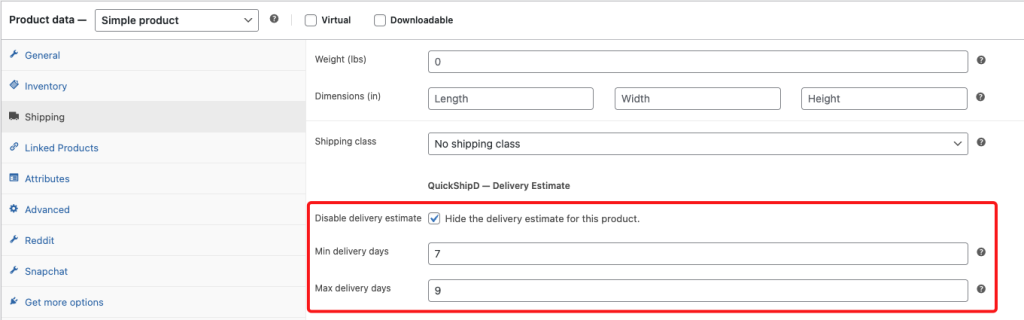
Base your number on your actual order history with each supplier, not their marketing page. If you’ve fulfilled fifty orders through a particular supplier, you have real data on how long they actually take — use that instead of their stated turnaround time.
| 💡 PRO TIP Add a buffer of a few extra days beyond your supplier’s stated average, especially for new supplier relationships where you don’t yet have enough order history to trust the number fully. |
What to Do When a Supplier’s Timeline Changes
Supplier performance shifts — a new shipping partner, a factory delay, a seasonal slowdown. When you notice a pattern of orders running consistently longer than your current estimate, update the per-product override for that supplier’s items promptly rather than letting the gap between promise and reality widen.
Base It on Reality, Not the Supplier’s Pitch
Dropshipping doesn’t have to mean vague or unreliable delivery estimates — it means basing your numbers on your own order history rather than a supplier’s best-case claim. Per-product overrides let you reflect real differences across suppliers honestly.
QuickShipD’s per-product settings give you that flexibility without needing a separate tool for each supplier relationship.