
Most WooCommerce shipping policy pages either don’t exist, or exist as a wall of generic legal-sounding text nobody actually reads. Both versions fail the same customer: the one who’s specifically looking for an answer about international shipping, returns, or delays before they’ll commit to buying.
Here’s how to write a shipping policy page that actually gets read and answers the questions customers really have.
Start With the Questions Customers Actually Ask
A shipping policy page written from a legal-compliance mindset tends to bury the useful information under formal language. A shipping policy page written from a customer’s mindset leads with exactly what they came to check: how long will this take, what will it cost, and what happens if something goes wrong.
Structure the page around these three questions directly, using them as your actual headings, rather than generic legal section titles a customer has to decode.
| ✅ KEY TAKEAWAY A shipping policy page isn’t a legal formality — it’s a trust-building page most customers only visit when they have a specific, pre-purchase question. Answer that question clearly and you keep them moving toward checkout. |
Match What the Page Says to What Your Site Actually Shows
If your product pages already show a calculated delivery estimate, your shipping policy page should describe the same logic in plain language, not a different or conflicting number. “Most orders arrive within 3-5 business days, and you’ll see an exact estimate on each product page” keeps both sources aligned.
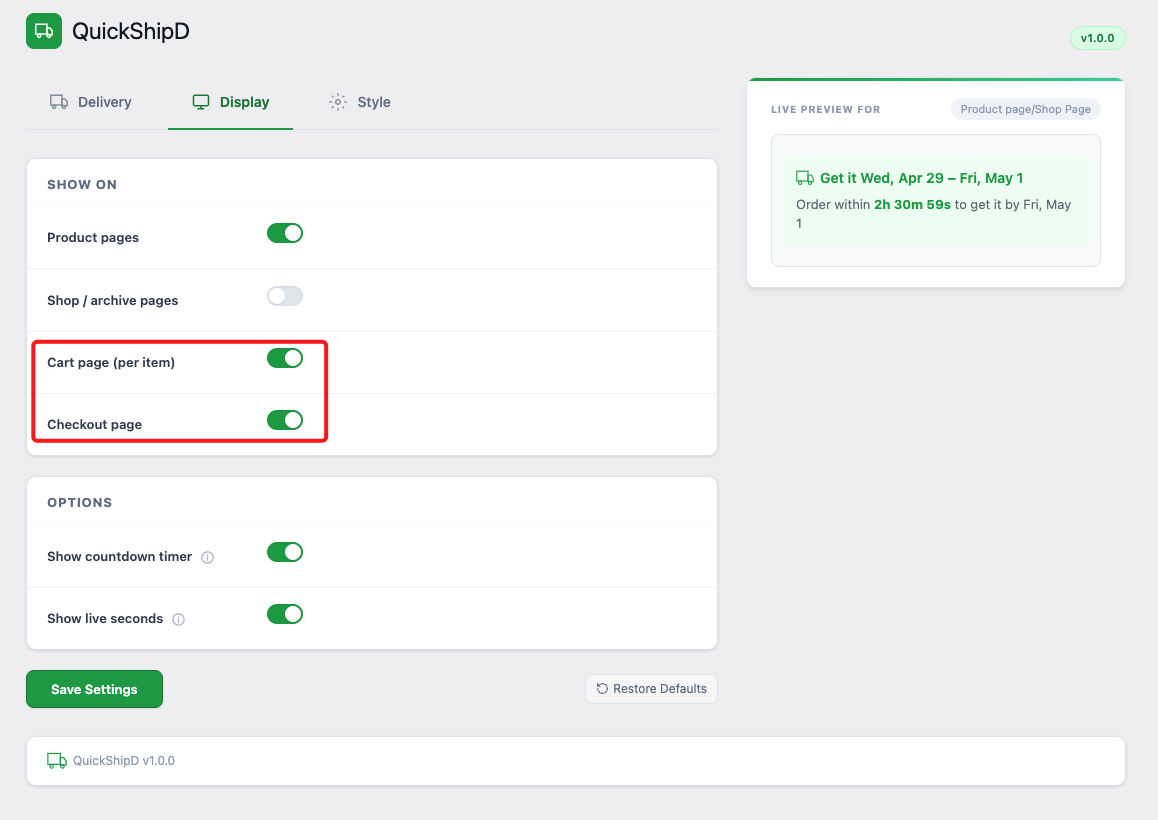
| 🚧 IMPORTANT A mismatch between your shipping policy page and your product page estimates undermines both. Whenever you adjust your delivery days or cutoff time in QuickShipD, check whether your shipping policy page still describes it accurately. |
What to Include Beyond Delivery Timing
- Shipping costs and any free shipping thresholds: stated clearly, without requiring a trip to checkout to find out
- International shipping availability and typical timelines: if you ship internationally, address it directly rather than leaving customers to guess
- What happens if a package is lost or delayed: a short, honest explanation of your process removes anxiety for anyone specifically checking this
- How to contact support about a shipping issue: a direct link or email, not a buried general contact form
Answer the Real Question, Not the Legal One
A shipping policy page earns its place on your site by actually answering the questions customers have before they buy, in language that matches what they’ll see elsewhere on your store. Keep it consistent with your product page estimates, and it becomes a trust-builder instead of an ignored formality.
QuickShipD’s calculated estimates give you the exact numbers to describe accurately on that page.