
A delivery estimate that was accurate the day you set it up doesn’t stay accurate forever on its own. Carriers change transit times, your processing speed shifts as order volume grows, and holidays from last year don’t automatically carry over to this one. Without a regular check, the gap between your promise and reality grows quietly.
Here’s a simple quarterly audit you can run in under fifteen minutes to keep your delivery estimate honest.
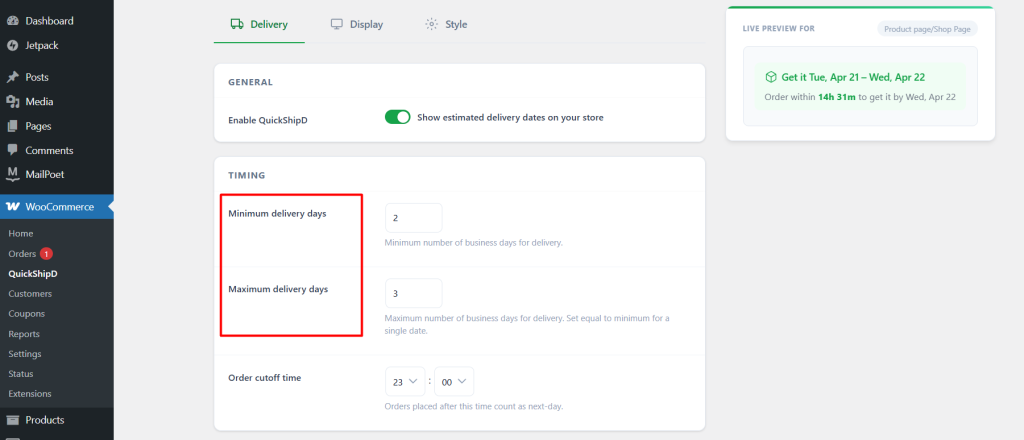
Step 1: Compare Your Estimate to Real Order Data
Pull a sample of recent orders — twenty is enough for a rough check — and compare the delivery window you promised against when they actually arrived. If a meaningful share are arriving after the promised window, your estimate needs to widen. If they’re all arriving well within it, you might have room to tighten it and look more competitive.
| ✅ KEY TAKEAWAY An estimate that’s consistently beaten by your actual delivery times isn’t a problem — it’s a competitive opportunity you’re leaving on the table. Tightening an overly conservative window can be just as valuable as widening an overly optimistic one. |
Step 2: Check Your Holiday List Against the Actual Calendar
Holiday lists are the setting most likely to quietly go stale, since they need fresh dates added at least once a year. Check that upcoming public holidays for the next quarter are actually in your list, not just the ones you remembered when you first set it up.
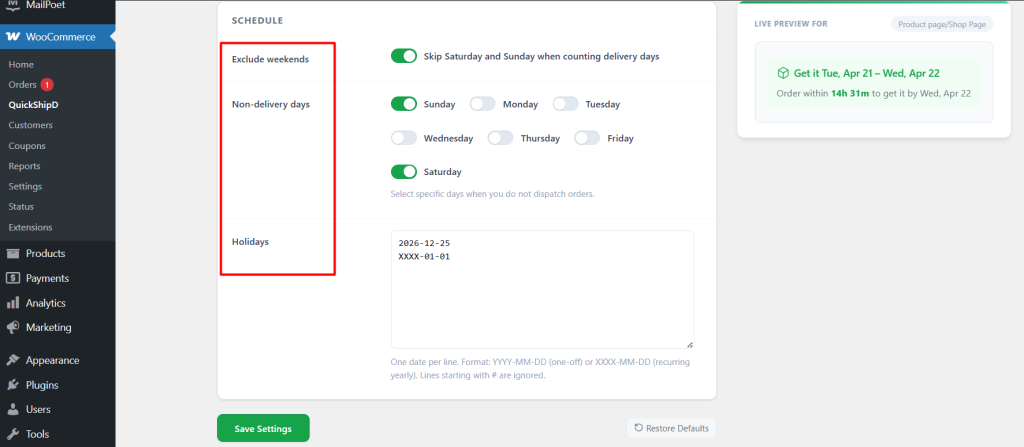
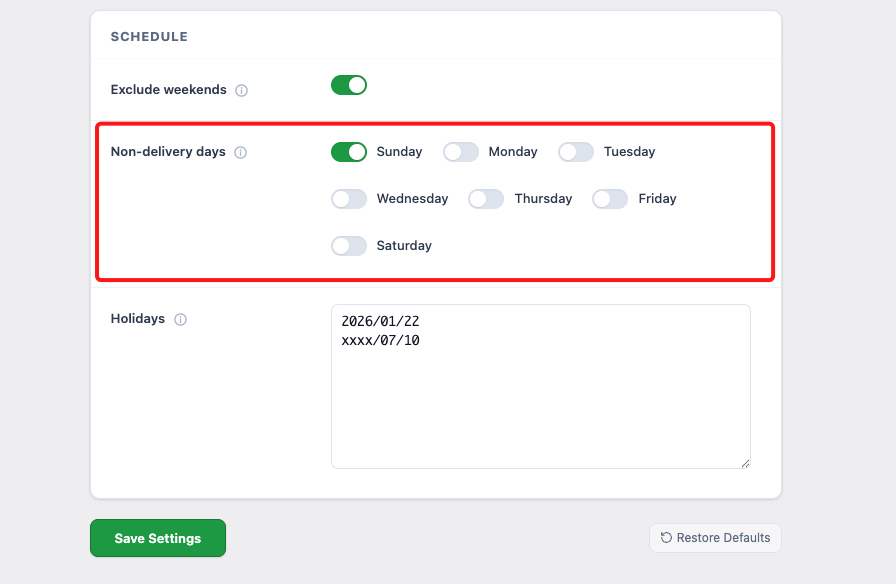
Also confirm your non-delivery days still reflect reality — if you’ve changed your warehouse schedule since setup, this is the setting most likely to have drifted out of sync without anyone noticing.
| 💡 PRO TIP Set a recurring calendar reminder for the first week of each quarter specifically for this check. It takes far less time than dealing with the support tickets and reviews that come from an estimate that’s quietly gone stale. |
Step 3: Spot-Check Per-Product Overrides
If you use per-product overrides for specific items, check whether those products’ actual fulfilment circumstances have changed — a supplier that used to be slow might have sped up, or a product that used to ship standard might now be frequently backordered.
A Small Habit That Protects a Big Trust Signal
A delivery estimate is only as good as its last update. A short, regular audit against real order data and your actual calendar keeps the number honest without requiring constant attention.
QuickShipD’s settings make each of these checks a quick review rather than a rebuild.